Maranakatte Temple
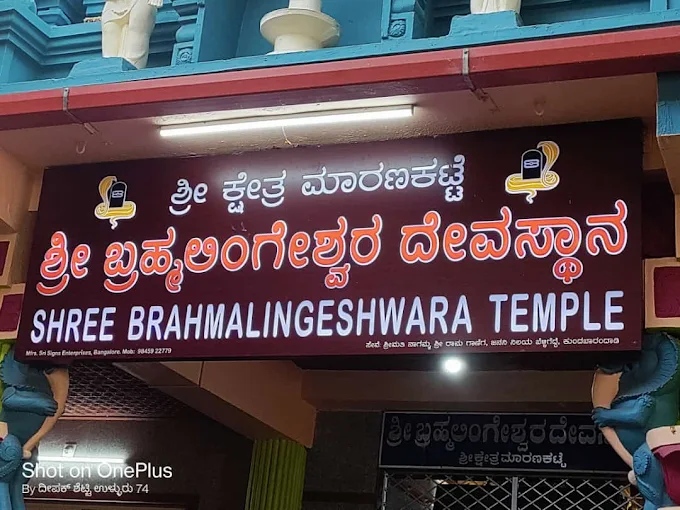
Shree Kshetra Maranakatte, the great daiva shrine of Brahmalingeshwara on the Souparnika.
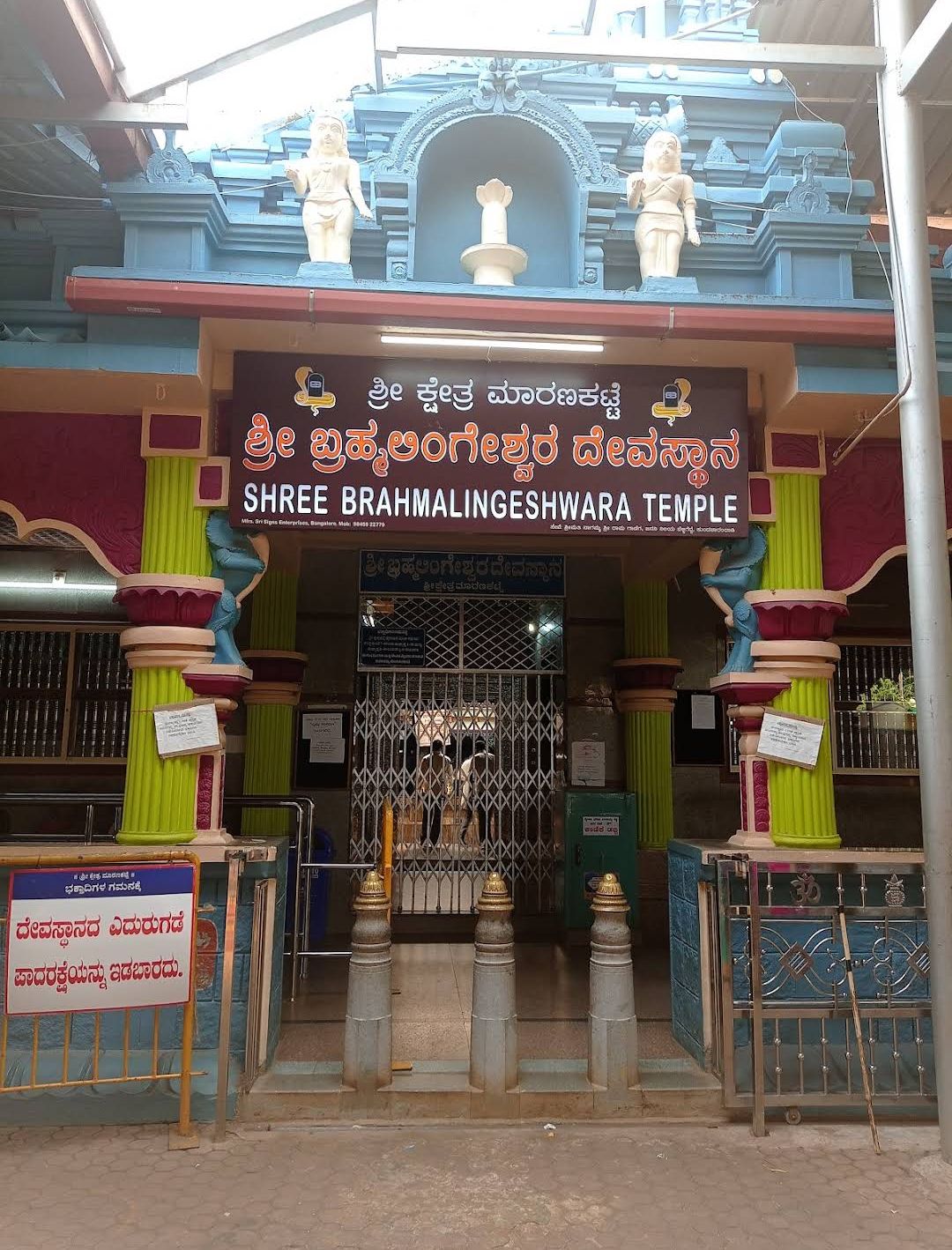
The Shree Brahmalingeshwara Temple at Maranakatte, on the banks of the Souparnika river in Kundapura taluk, is one of the most powerful and popular shrines of coastal Karnataka. Revered as a daiva kshetra where the divine delivers justice and grants the wishes of the faithful, it is best known for its vast annual jatre (fair), among the largest temple gatherings on the entire coast.
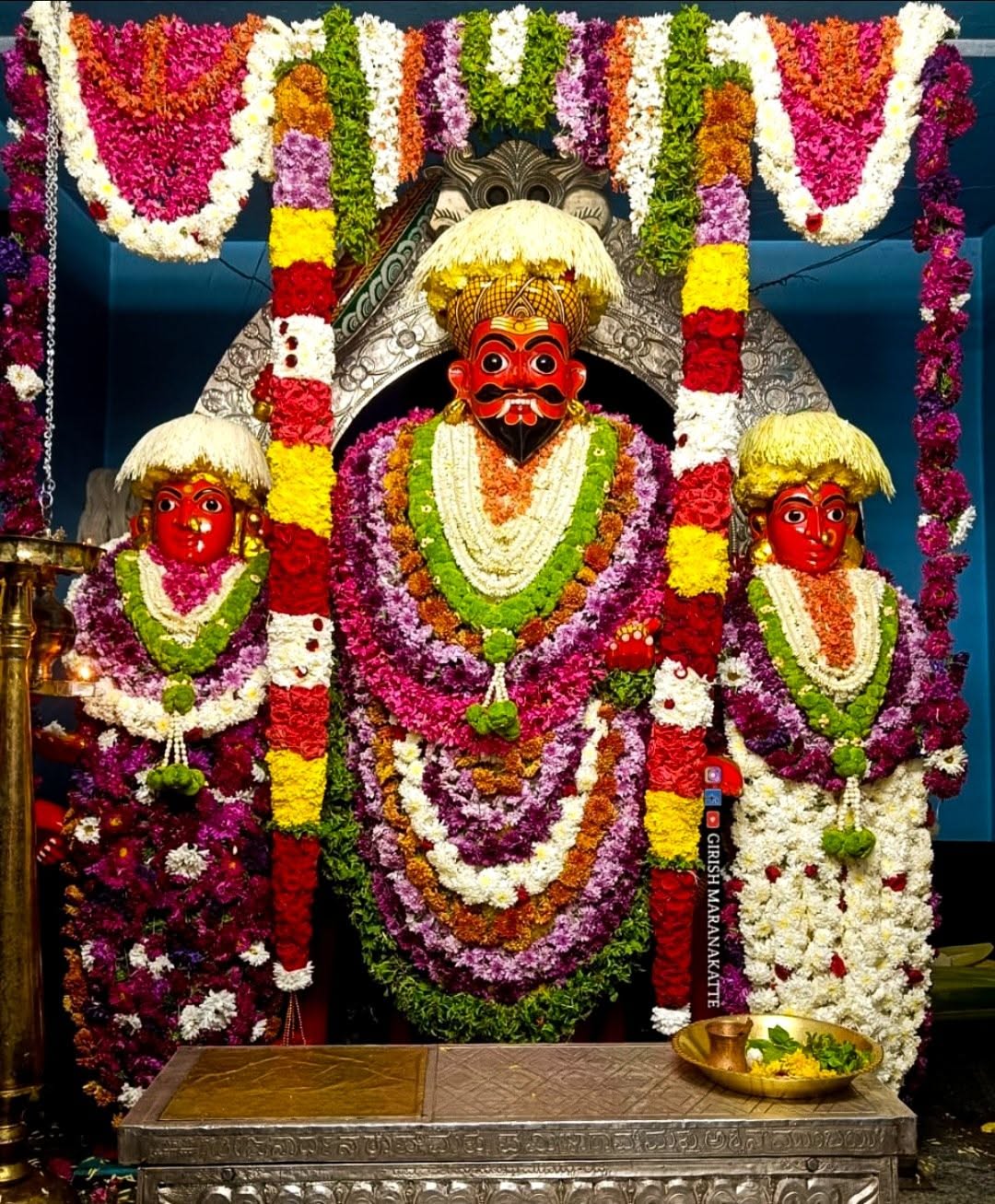 Brahmalingeshwara
Brahmalingeshwara, the presiding deity
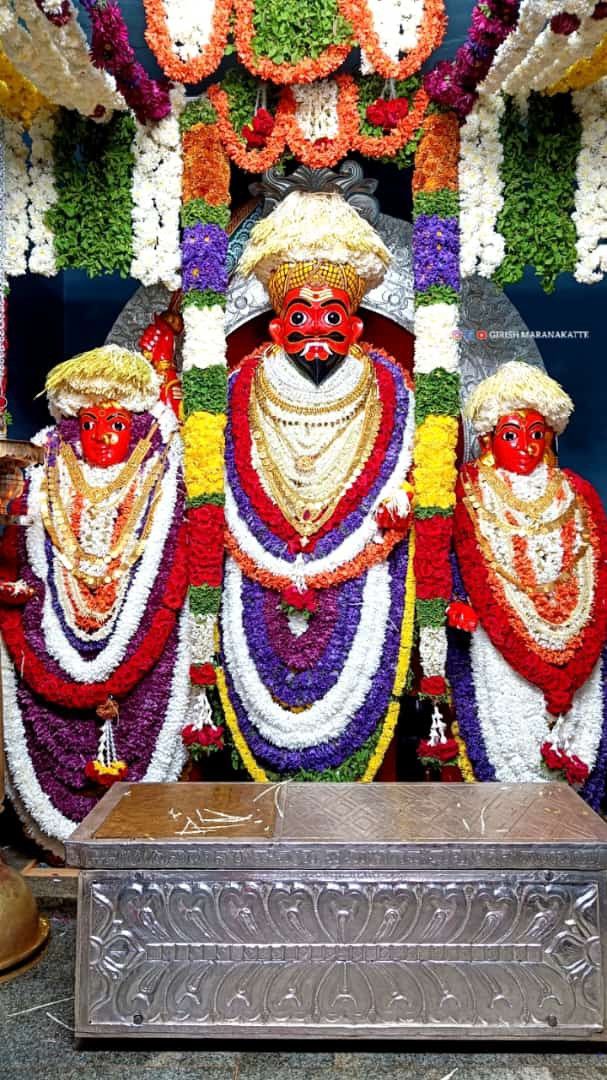
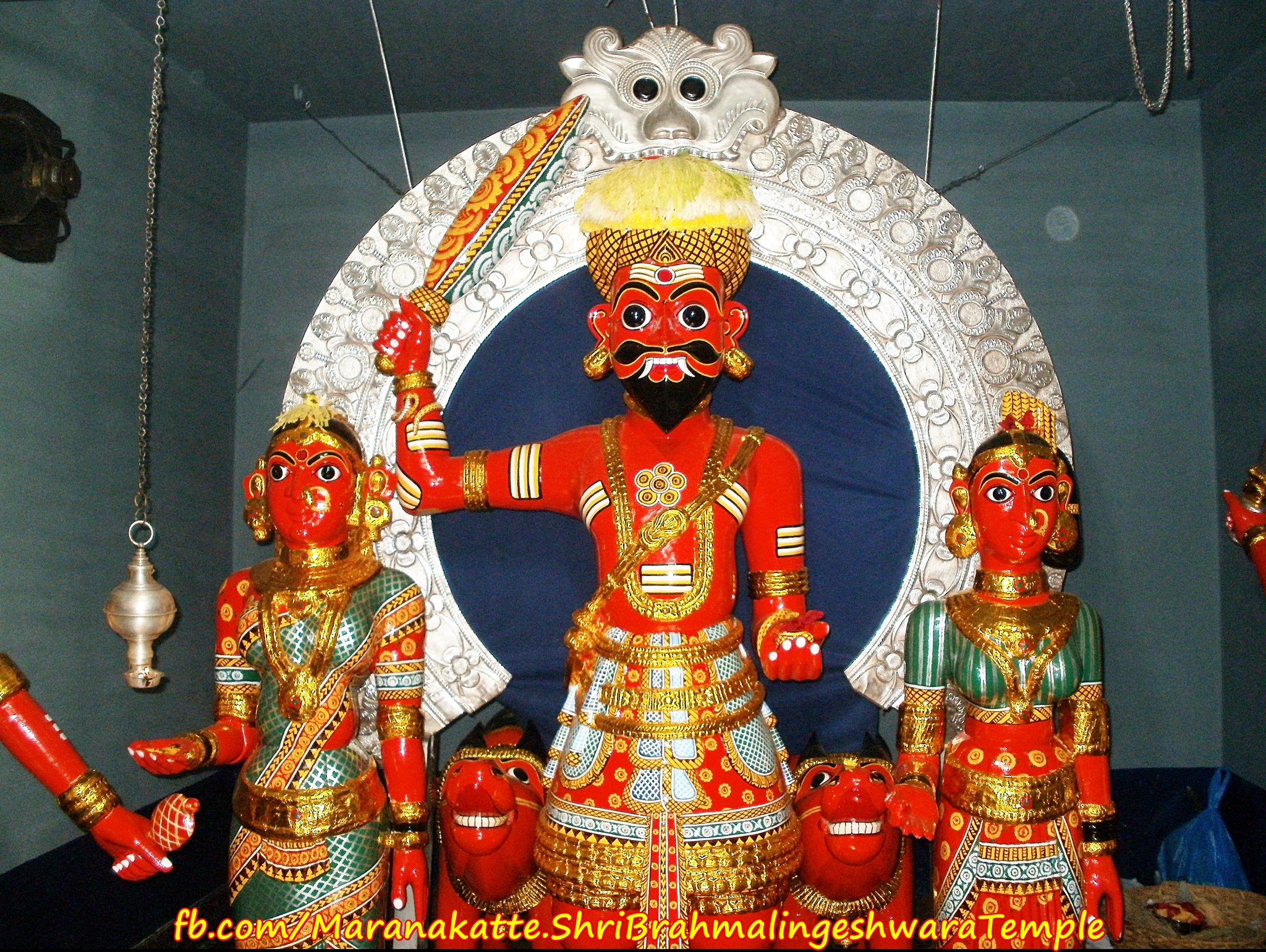
The presiding deity of Maranakatte is Brahmalingeshwara, worshipped at the riverside complex as a powerful guardian-divinity in the living daiva (spirit-deity) tradition of the Tulu-Kannada coast. In this tradition the divine is felt not as a distant abstraction but as an active, present force that watches over the land, protects its people and upholds dharma. The fierce, brilliantly painted festival images (the red faces, the towering crowns, the attendant figures on either side) are the visible forms through which the deity is honoured and carried before the community during worship.
Brahmalingeshwara is regarded above all as a giver of justice. Devotees come to lay their disputes, fears and hopes before the deity, trusting that what is true will be upheld and what is wrong will be set right. This reputation as an unfailing arbiter of truth is central to the temple's standing across coastal Karnataka and beyond.
The deity is at once a daiva of the living coastal tradition and a Shiva Linga worshipped by classical Agamic rite, the name Brahmalingeshwara itself signifies a sacred linga associated with divine creation and cosmic energy. The Linga receives daily worship for the peace, prosperity, protection and spiritual progress of the faithful, and the temple stands as one of the important Shaiva shrines of Kundapura taluk.
A kshetra of vows and justice
What draws people to Maranakatte from across the coast, and from the wider Kannada and Tulu diaspora, is its reputation as a place where prayers are answered. Devotees make a harake (vow): a promise to offer worship, perform a seva or return for the jatre if a wish is granted, recovery from illness, success in a venture, the resolution of a long-standing dispute, or relief from injustice. The fulfilment of these vows, recounted from family to family over generations, has made Brahmalingeshwara one of the most trusted deities of the region.
For the faithful, Maranakatte is a court of last resort, a place where truth is weighed by the divine and justice is believed to be certain.
The annual jatre
The defining event of Maranakatte's calendar is its annual jatre, a temple fair of extraordinary scale. For its duration the quiet riverside is transformed: lakhs of devotees converge, the temple streets fill with stalls and offerings, and the air rings with devotional music, drums and the bustle of the crowd. It is one of the largest temple gatherings on the Karnataka coast and a defining occasion of the regional festival year, when families who have made vows through the year arrive to fulfil them.
The climax of the festivities is the Rathotsava (Brahmarathotsava), the great car festival, in which the processional deity is mounted on a towering, decorated temple chariot and drawn through the streets by thousands of hands. To take part in pulling the ratha, or simply to behold it, is considered deeply auspicious.
Daiva worship and ritual
Maranakatte belongs to the same deep coastal stream of belief that gives the region its Bhuta Kola and Nagaradhane, the ritual veneration of daivas and spirits as protectors of the community. Worship here follows the elaborate customs of this tradition: ceremonial decoration of the deity, the offering of flowers, lamps and food, and ritual observances led by the temple's hereditary functionaries. Vivid, larger-than-life imagery, the painted faces and ornamented crowns seen in these photographs, is central to how the daiva is made present and honoured before the gathered devotees.
The Maranakatte temple complex
One of the distinctive features of Maranakatte is that the Brahmalingeshwara shrine does not stand alone: it forms part of a sacred riverside complex that also holds the Sri Janardhana Temple and the Sri Brahmi Durgaparameshwari Temple. Together the three shrines represent the three great streams of Hindu worship (Shaivism (Brahmalingeshwara), Vaishnavism (Janardhana) and Shaktism (Brahmi Durgaparameshwari)) within a single sacred landscape.
The Janardhana Temple, set along the river, has been a centre of Vaishnava devotion for centuries; Lord Janardhana is worshipped in classical Vaishnava form as protector and sustainer, with an annual Janardhana Rathotsava and Krishna observances. Beside it, the Brahmi Durgaparameshwari shrine honours the Divine Mother, believed to bless devotees with courage, protection and prosperity. This coexistence of Shiva, Vishnu and Shakti makes Maranakatte a uniquely complete pilgrimage centre, where the faithful may worship all three within one visit.
Daily worship & Mahashivaratri
Within the Agamic rhythm of the temple, daily worship of the Linga generally includes Nirmalya Darshana, Abhisheka, Alankara, Archana, Maha Mangalarati and the distribution of prasada, the rhythmic chanting of Vedic hymns and Shiva mantras filling the sanctum. The most important festival of the Shaiva calendar here is Mahashivaratri, marked by special Abhishekas and Rudrabhisheka, devotee fasting, night-long worship and religious discourses that draw thousands. Its coastal architecture (a stone garbhagriha, mukha mantapa, deepastambha, balipeetha, courtyard and traditional tiled roofs built to shed the heavy monsoon rains) reflects the practical and aesthetic traditions of the region.
Setting and access
The temple stands on the Souparnika, the same sacred river that flows past Kollur and Maravanthe on its way to the Arabian Sea, and the riverside setting adds to both its sanctity and its appeal. Maranakatte lies inland in Kundapura taluk and is reached by road from Kundapura town, with bus and taxi connections; the route can be combined with a wider pilgrimage circuit of the coast's great shrines.
Festival and jatre dates follow the traditional lunar calendar and vary year to year, confirm current dates, timings and any darshan arrangements with the temple before planning a visit, especially during the jatre when crowds are very large.
See also
References & notes
- Temple administration, Shree Brahmalingeshwara Devasthana, Maranakatte.
- Temple festival and jatre calendars of coastal Karnataka.
- Accounts of the daiva (spirit-deity) worship traditions of the Tulu-Kannada coast.
Photographs on this page were contributed by devotees and visitors documenting the temple and its festivals, and are used here for cultural and educational reference.